Hybrid Inverters for Solar Power: Everything You Need to Know

CCurrent energy systems need solar hybrid inverters. Energy management is added to solar inverters. This advanced technology connects solar panels, batteries, and the grid, unlike a grid-tied inverter. It maintains energy flow between sources.
This technique converts solar-generated DC electricity into residential and business AC power. Extra energy is stored in batteries. Its adaptability makes it ideal for energy efficiency and reliability.
How grid-tied inverters differ from hybrids
Grid-tied inverters connect to the grid without batteries. Efficiency is improved by returning excess solar energy to the grid. However, it cannot provide backup power during outages.
This is enhanced by hybrid inverters. Extra energy is saved for grid failure. In steady grid settings, grid-tied power inverters work well, while hybrid solutions give more control and independence.
Why off-grid solar inverters matter
Solar inverters for off-grid systems work without utilities. Only solar panels and batteries power it. This technique works in remote areas with inconsistent grid connectivity.
Hybrid off-grid and grid-connected inverters expand this. Energy availability controls mode switching. This versatility helps households, farms, and small businesses with diverse energy needs.
Key features of modern hybrid inverters
Modern hybrid inverters do more than convert power. Their novel features improve performance and utility.
Integration of battery reserves energy for nights and outages. Production and consumption are monitored via smart energy management systems. Switching seamlessly powers all devices.
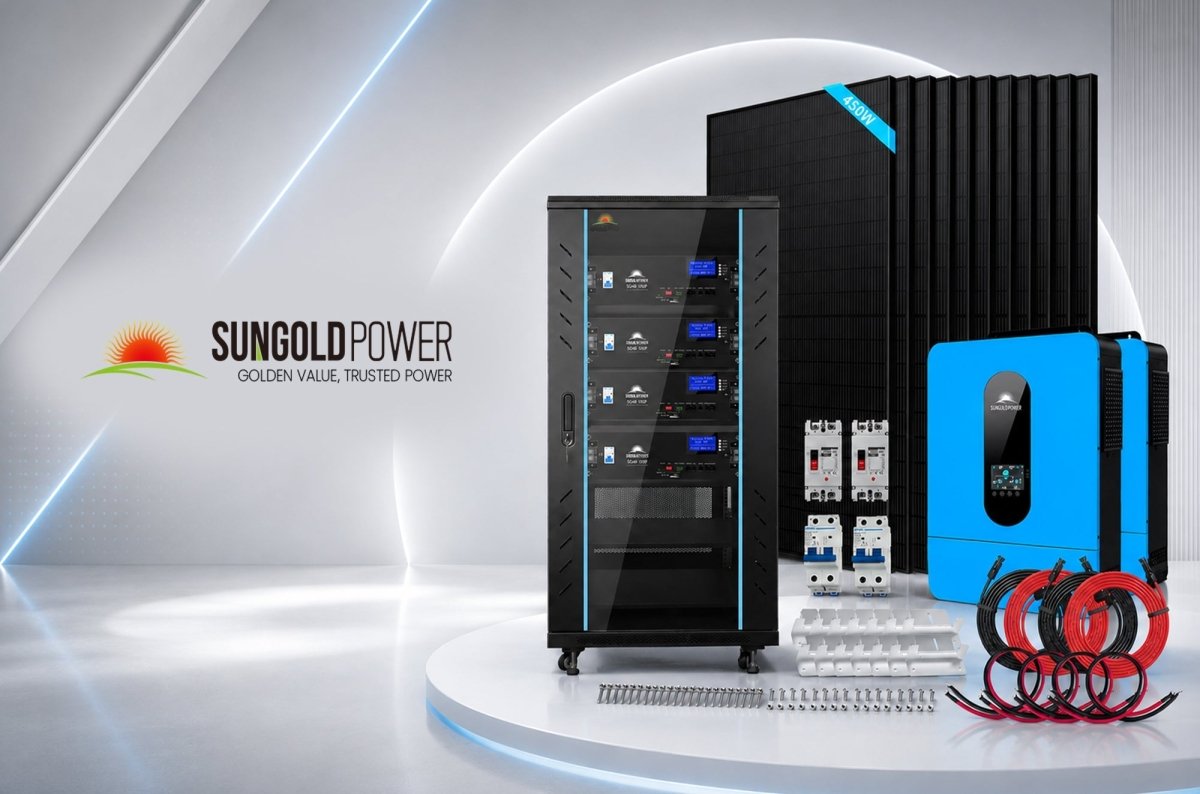
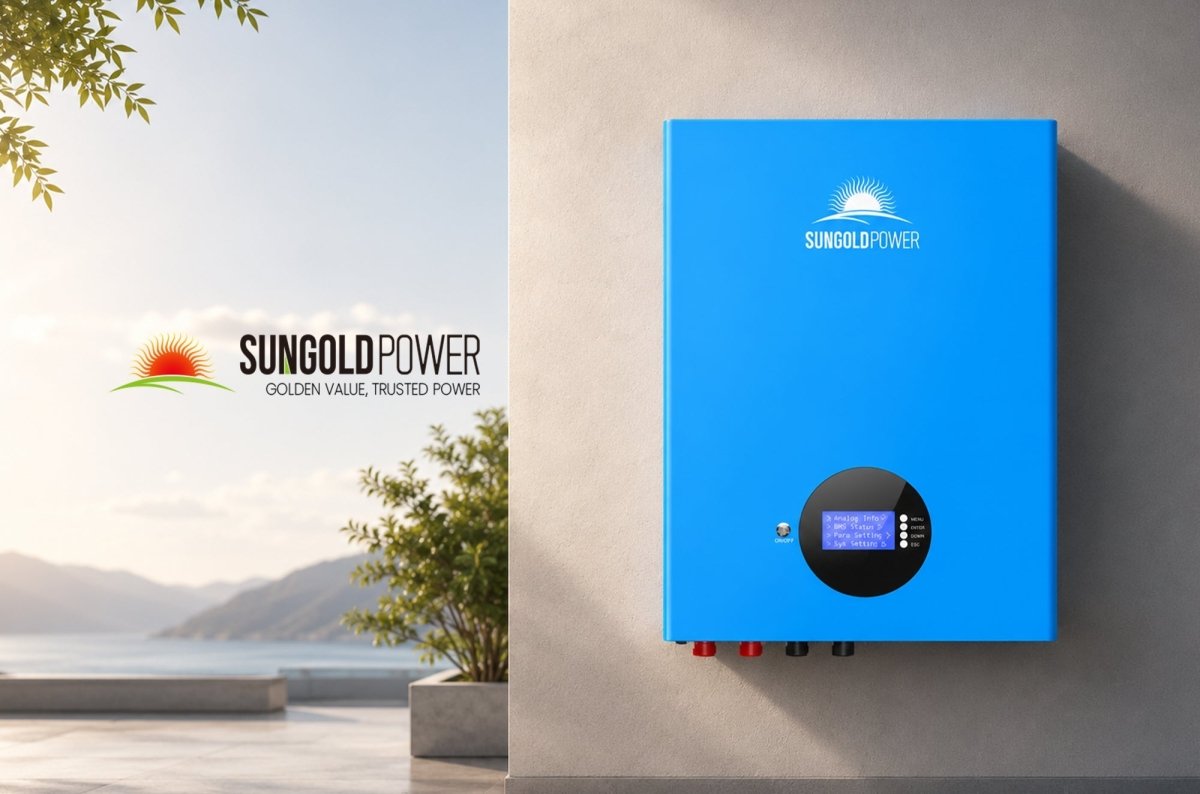
The 12KW 48V All-In-One Hybrid Inverter has these traits. Solar, battery, and grid connectivity are in one small package. Energy management and whole-home backup are automated.
Smart energy management with hybrid tech
Smart energy management optimizes storage, production, and use. Hybrid inverters enhance energy flow with data. First solar, then battery storage, then grid power when needed.
Users may track and adjust energy utilization. This method cuts waste and boosts efficiency. It keeps energy available when demand rises.
Real-time monitoring is available with SunGoldPower. The tools indicate daily energy output and consumption.
Multiple energy sources blended smoothly.
Power sources are blended in hybrid inverters. Solar panels generate electricity during the day, which they store in batteries. When solar production drops, stored energy is used automatically.
When solar and battery power fail, the grid is used. This smooth transition keeps appliances working. Power inverters connected to the grid cannot offer this flexibility.
Scalability for energy growth
Increasing energy needs are typical. Expand without redesign with hybrid systems. The 12KW inverter can handle 18 kW per unit and 72 kW in tandem.
Scalability suits home, farm, and small company use. Starting modestly, users can grow as energy needs grow.
Reliable failback
Power outages disrupt life. By using battery storage, hybrid inverters provide fast backup. Critical devices keep running.
A 12KW system can pass 200 A. It powers home circuits, not loads. This ensures emergency energy reliability.
Any-environment versatility
Multiple ways hybrid inverters work. They can be on-grid, off-grid, or hybrid, depending on user needs. Their adaptability suits different energy and environmental conditions.
Split-phase and three-phase outputs are supported. This versatility ensures electrical system compatibility.
Supporting energy independence
Energy independence is attainable with the right system. Hybrid solar inverters remove power source dependence. You can produce, store, and manage energy.
Systems that combine solar, battery, and grid electricity are hybrids. They reduce external dependence and increase sustainability.
The efficient and scalable SunGoldPower inverter solutions achieve these goals. Energy efficiency and independence are promoted by these solutions.
Conclusion
A hybrid inverter offers a complete solution for modern energy needs. It combines the benefits of a grid-tied inverter, a grid-tie power inverter, and a Solar inverter for off-grid systems into one powerful unit.
Hybrids provide flexibility, control, and reliability. From smart energy management to uninterrupted backup, these systems change energy use.
As energy needs rise, hybrid inverters seem promising. Their integrated system is efficient, scalable, and independent.